Table of Contents
- Amaranth in the Garden
- Amaranth Growing Conditions
- When to Plant Amaranth
- Amaranth Seeds
- Amaranth Plant Care
- Growing Amaranth in Containers
- Amaranth Growing Tips
- Harvesting Amaranth
- Cooking With Amaranth
- Health Benefits of Amaranth
- FAQs
* Our articles never contain AI-generated slop.
Amaranth is often overlooked by gardeners, but it can be a super productive addition to your garden and fill numerous roles...

Let's talk about why you should grow it, and how exactly to do just that.
Amaranth in the Garden
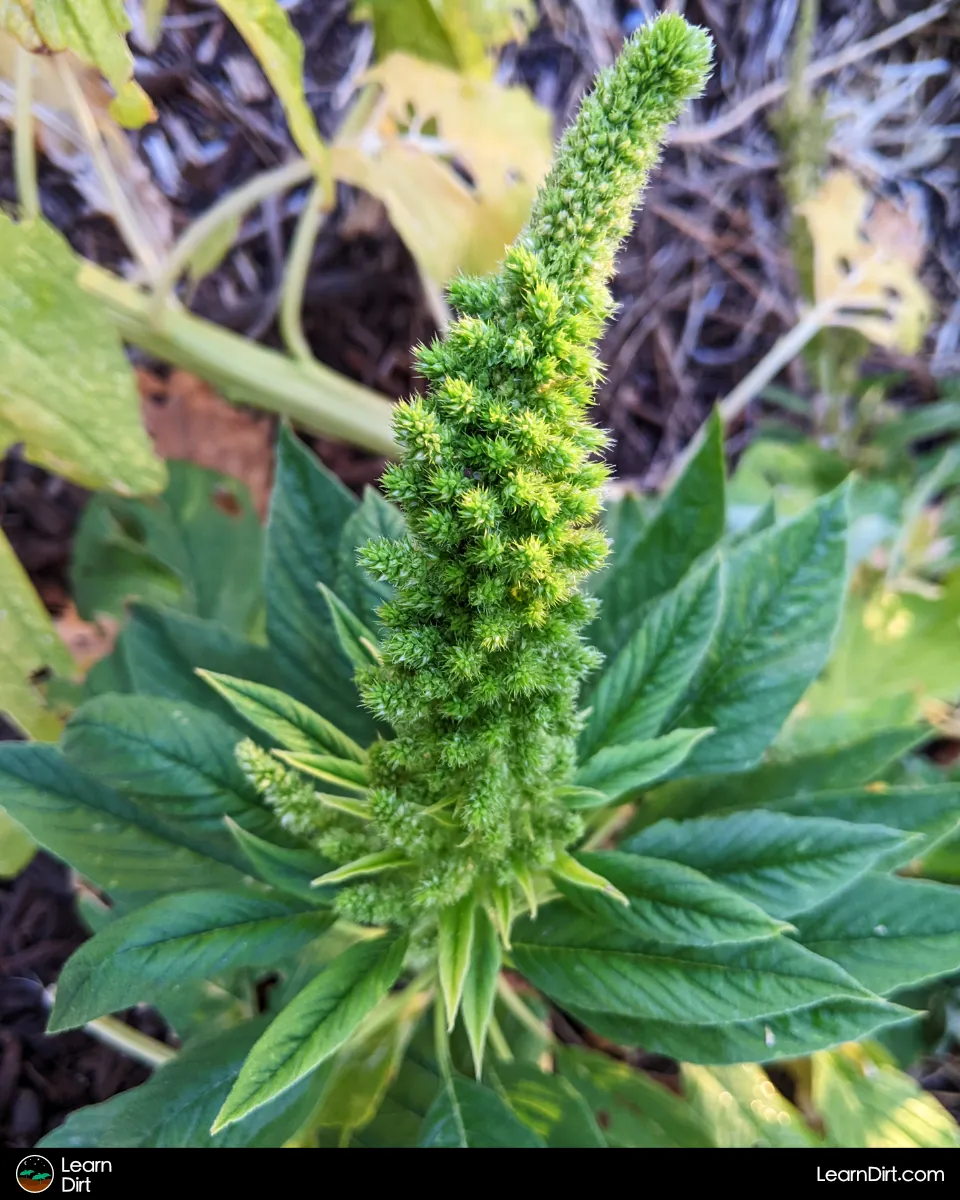
Reasons to Grow Amaranth
You're not alone if you aren't sure what you would do with amaranth or why the heck you'd grow it in your garden. It's a bit of a weird plant not usually seen in gardens.
Disclaimer: This post may contain affiliate links. Refer to the privacy policy for more information.
That doesn't mean it's not worth your time, however!

Here are some of the benefits of growing garden amaranth:
- Nutrient-packed green leaves (cook like spinach)
- Healthy grain with lots of protein and amino acids
- Great living bird-feeder to attract birds to your garden
- Tall thick stalk make great structure for pole beans
- Act as a tall shady umbrella when planted densely, protecting lower plants from hot sun
- Unusual cut flowers are an intrigueing and beautiful additions to boquets
- Other gardeners will ask you all about it
- Readily self-seeds in high numbers if allowed to
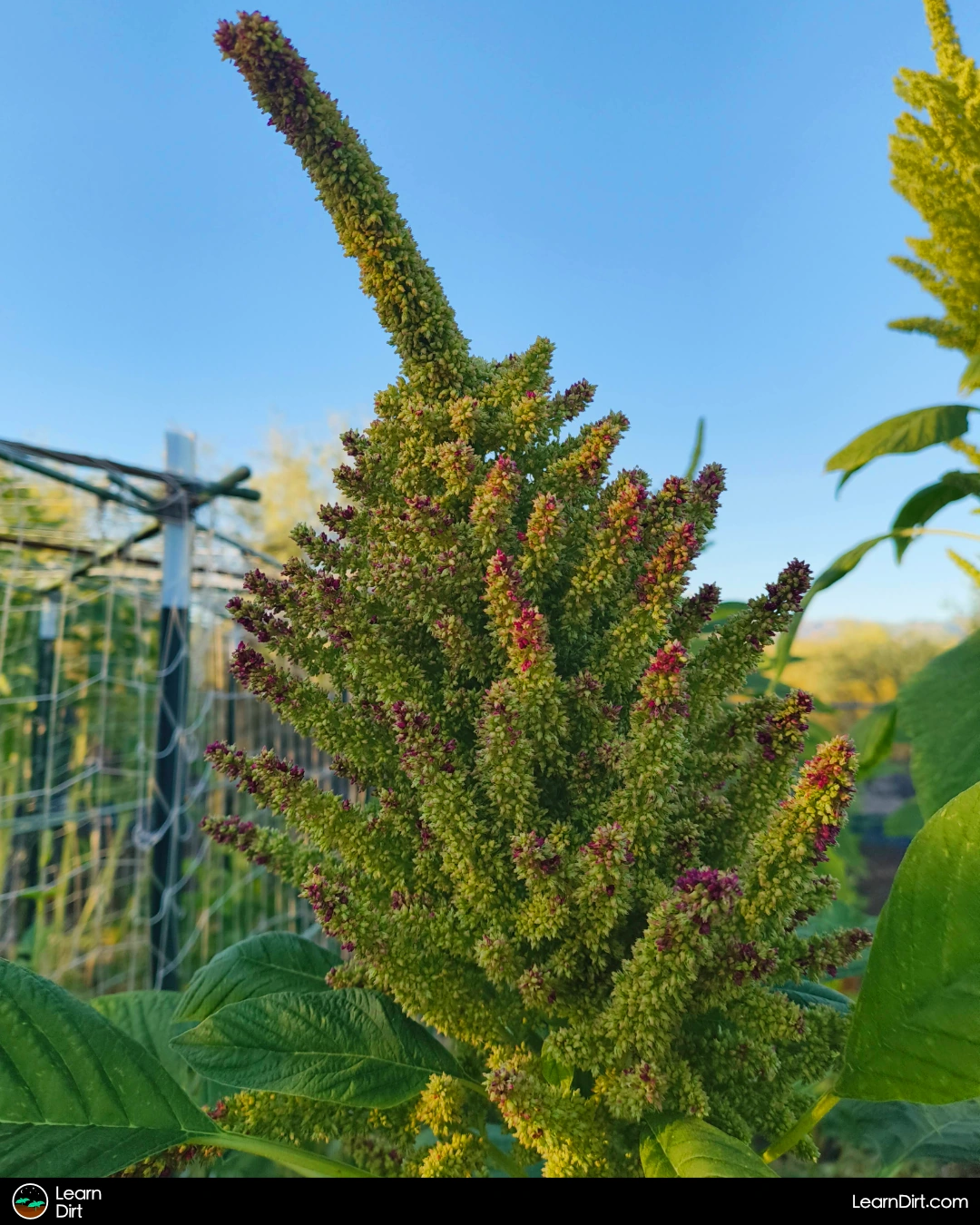
Amaranth Growing Conditions
Amaranth likes it HOT.
Where I live in the Sonoran Desert, summer temps regularly meet or exceed 110F (43.3C) during the hottest months.
Amaranth thrives under these conditions, with a bit of help from irrigation. Not many leafy greens hold up like amaranth does in these temps.
The leaves barely even wilt, so their capacity to act as shade umbrellas above smaller plants really shines in the super-hot summers.
When to Plant Amaranth
Wherever you live, plant amaranth just before your hottest season, and be sure it's in a sunny place.
Amaranth Growing Season
Amaranth Seeds
If your goal is to produce as much food as possible (in the form of leaves and grains), grab a bag of organic eatin' amaranth.
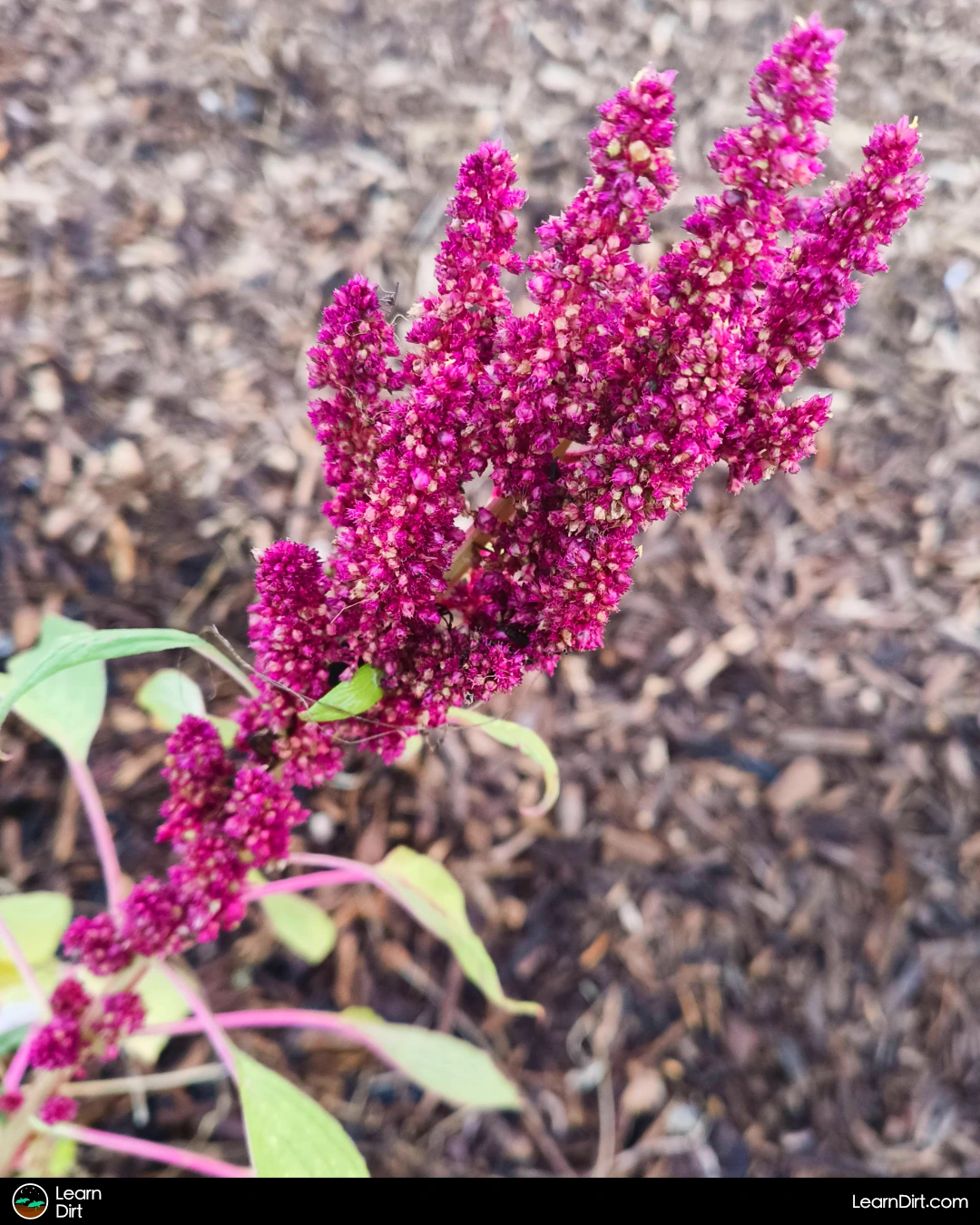
If you want flowers and visual appeal, check out these flashier options:
- Red Garnet Amaranth
- Bronze Amaranth
- Love Lies Bleedin' Amaranth
- Globe Amaranth
- Red Amaranth
- 3-Color Amaranth Mix
How Deep to Plant Amaranth Seeds
Amaranth seeds are extremely small, even smaller than poppy or chia seeds. As you may have guessed, this means they're best sown just below the soil surface, hardly buried at all.
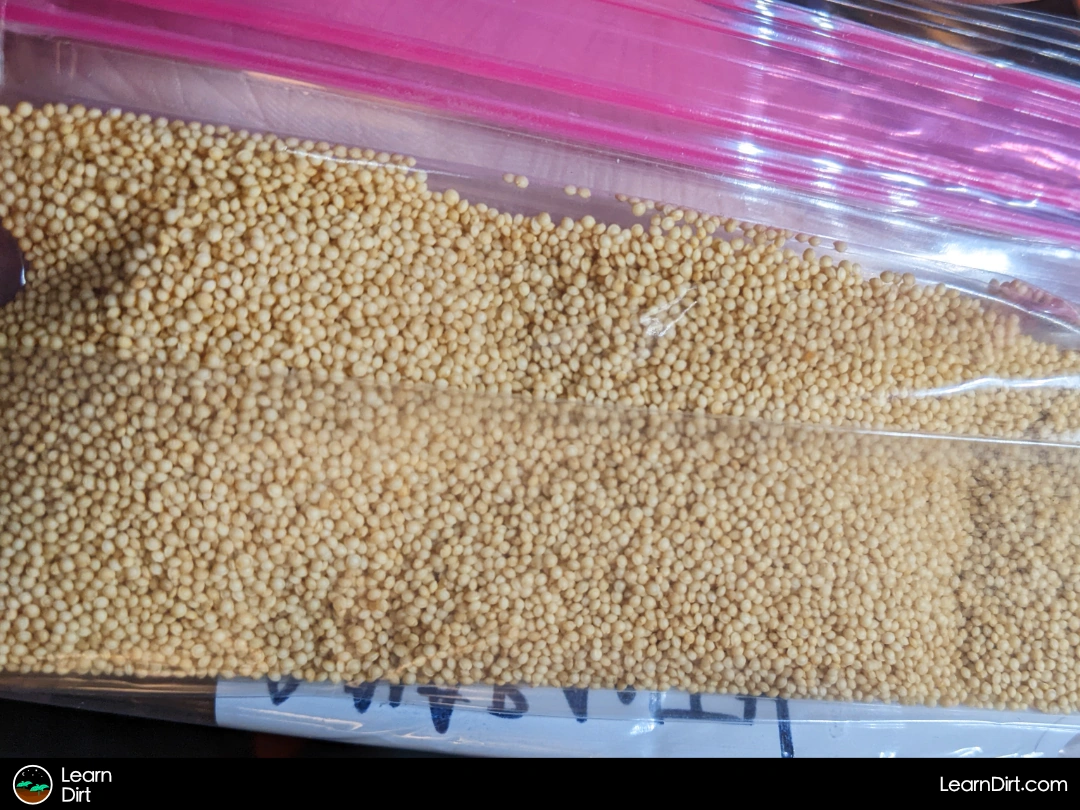
You can direct-sow them or broadcast them, it's up to you. Let's look at both ways:
Direct-Sow Amaranth Seeds
If you want to direct-sow the seeds, you can just press them lightly into the soil. A very light dusting of compost on top well help, but isn't required.
Join The Regenerative Gardening Community
Looking for a place to meet growers,
ask questions, share knowledge, be heard,
and feel like you belong? 🌱
Check It Out!
Broadcast Amaranth Seeds
Broadcasting amaranth seeds is my favorite method and the way I would recommend to you, so you can save some time and a lot of effort.
Toss the seeds around everywhere, making sure to over-sow somewhat to account for losses to birds, rodents, ants, and other critters.
(Optionally, but recommended) sprinkle with a fine dusting of compost after that (no more than 1 or 2 millimeters) to increase soil contact and hide them from critters.
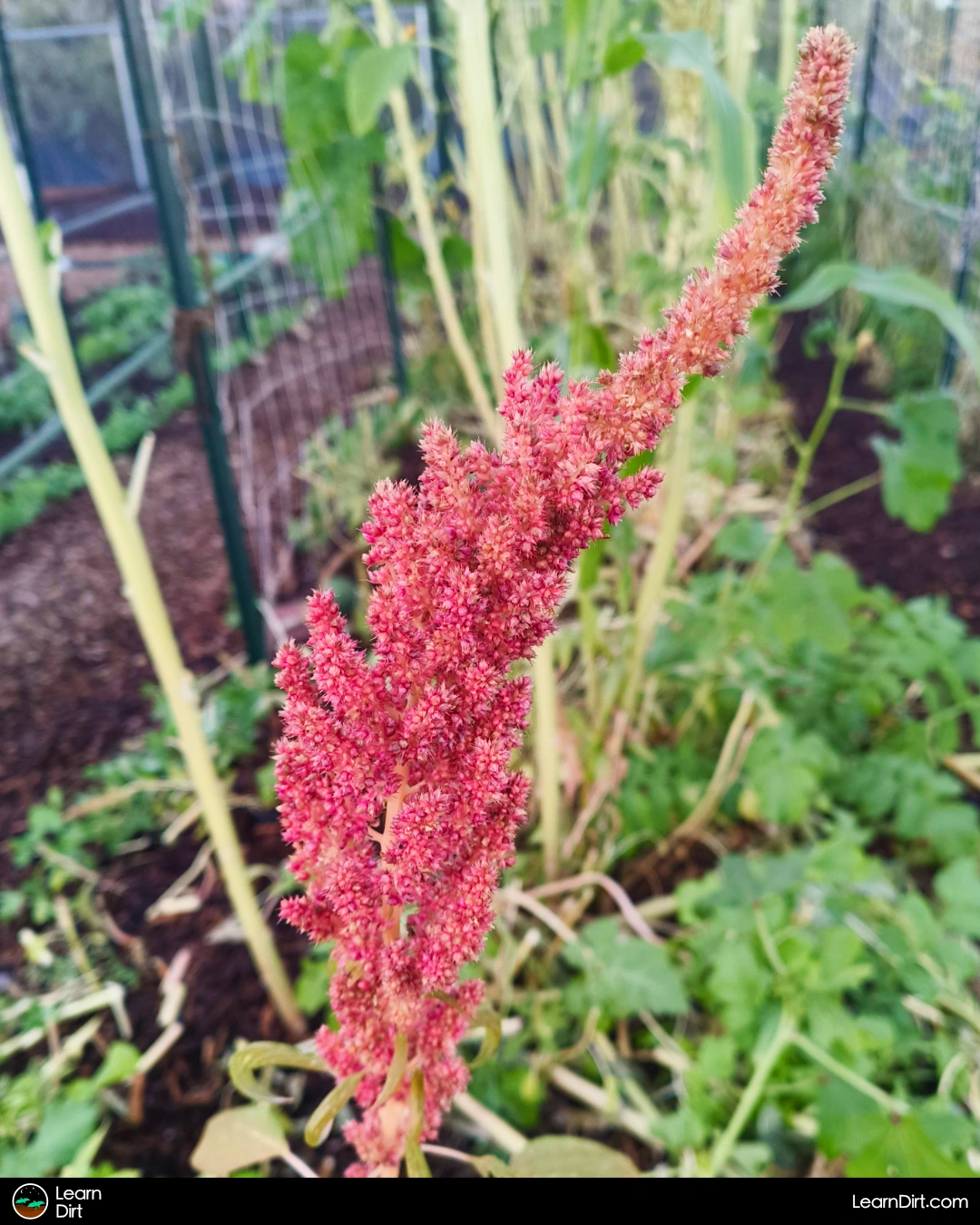
How Long Do Amaranth Seeds Take to Germinate?
You should water your amaranth seeds daily (if rain is not forecast) for at least 2 weeks.
It is important not to miss a watering during this time, as your seeds are so small and so close to the soil surface - where drying out can be a real concern.
Do not let the soil surface dry out during these 2 weeks!
I find that most amaranth seeds sprout within the first few days, generally less than a week.
The second week of daily watering helps ensure that taproots don't dry out as they work their way down to lower soil layers.
Water every other day through week 3.
Water every third day through week 4.
Adjust this schedule as necessary, factoring in weather, climate, soil type, and your personal experience as you learn what watering schedule works best for you.
Succession Planting Amaranth
If you're growing amaranth for its leaves, succession planting will allow you to greatly extend your season and fresh harvest time window.
This is also a great technique if you plant to harvest yaur amaranth for cut flowers.
Re-sow amaranth seeds over couple weeks for as long as your seasonal timing will allow for a continuous amaranth harvest.
If you're growing for grain, it's probably better that your whole crop come to maturity at the same time to make harvesting easier.
Amaranth Plant Care
Amaranth is a tough and rugged survivor, thriving in conditions that would leave most plants cowering in fear. We're talkin' extreme heat, brutal direct sunlight, sandy alkaline soil, high salinity, and very little rainfall. Plus drastic temperature swings.

In the wild it can be found most often in deserts in the areas directly adjascent to washes, where occasional rainfall causes moist ephemeral marshes to appear for short periods of time.
In your garden it will no doubt have an easier time growing than it does in the wild, even if seriously neglected. Plant it in some "just ok" soil with a lot of sand it in, water once a week once established, plant in direct sunlight, and don't baby it.
Giving amaranth too much water can actually cause shallow root development, which may not anchor the plants sufficiently when they get very tall. Infrequent water is best to push amaranth to develop deeper roots.
Growing Amaranth in Containers
Amaranth can get pretty huge if you grow it for grain, but the varieties grow for flowering usually stay smaller.
Either variety will stay much smaller if you grow them for greens and constantly harvest the leaves.
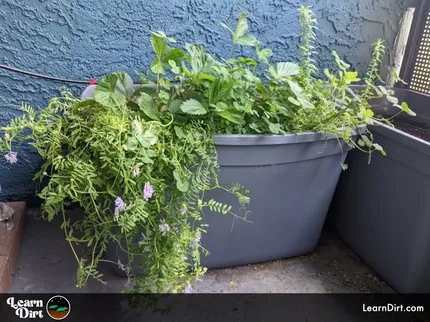
In any case, amaranth roots generally only run 1 - 2ft deep (0.3 - 0.6m) in good soil, so you're fine to grow them in containers.
While amaranth roots aren't that deep in good soil, it has an amazing ability to adapt to poor soils in deserts and arid environments - sending its roots down up to 4ft (1.2m) in some cases! This is known as "high plasticity" in the roots, referring to their adaptability to different circumstances.
Amaranth Growing Tips
Harvesting Amaranth
How you harvest your amaranth depends on whether you've grow it for leaves, flowers, seeds, or a comination.
Let's talk about harvesting for each of these cases:
How to Harvest Amaranth Leaves
Harvest amaranth leaves frequently as a cut-and-come-again.
Smaller leaves are more tender and tasty when sautéed (or even eaten fresh), while larger leaves get a bit tougher and are best used for soups and stews or pressure-cooked.
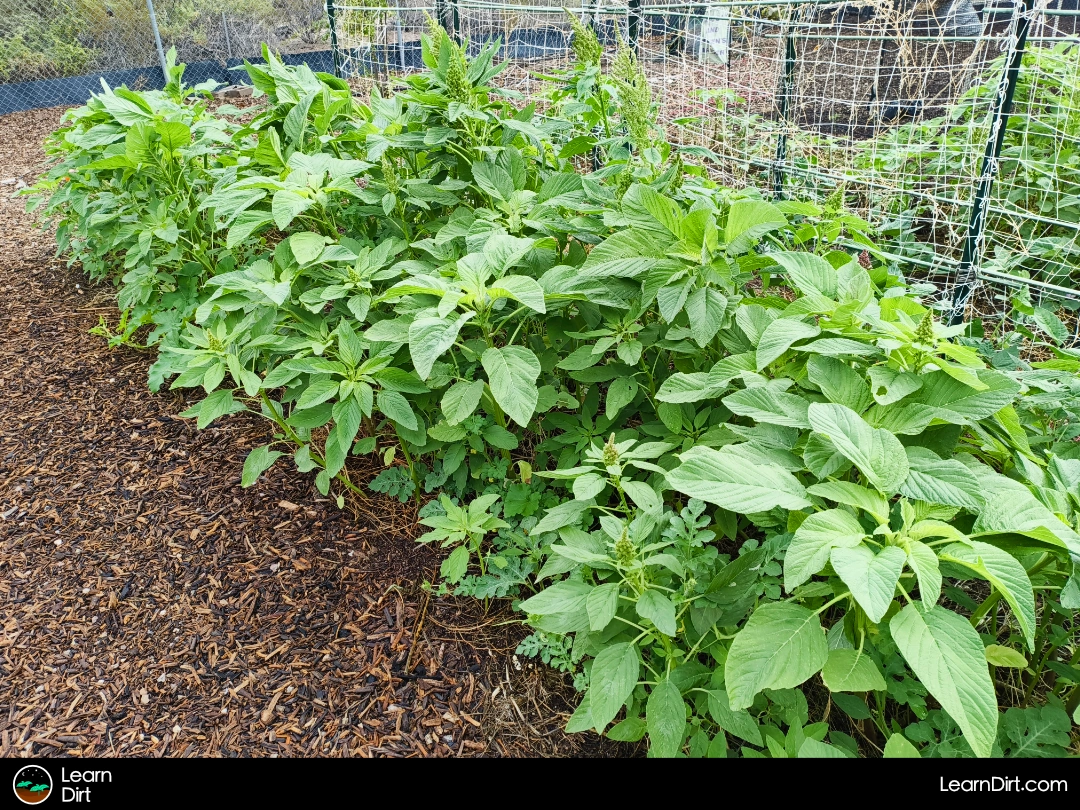
Once plants begin to flower, their leaves may grow tougher and preduce more bitter oxylate. At some point you may want to discontinue harvesting leaves and let the plants go to flower and seed or cut them down for mulch or compost.
How to Harvest Amaranth Flowers
How to Harvest Amaranth Grain
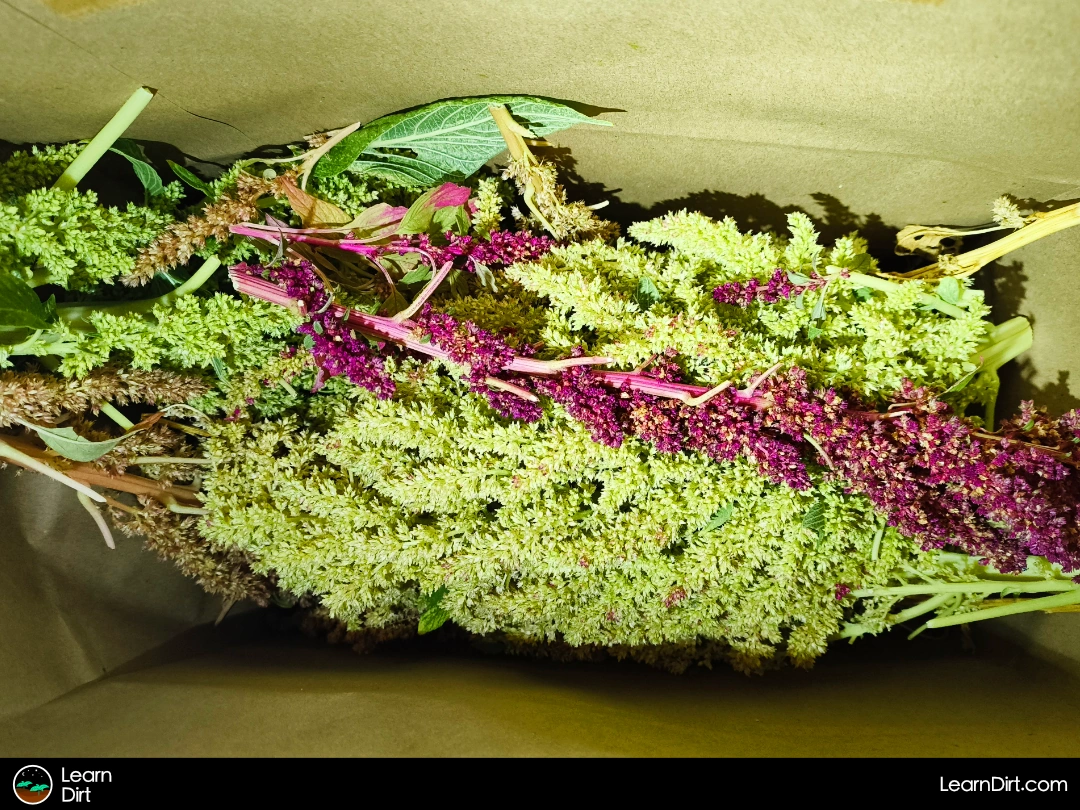
Because the dried grain will also contain small flower buds, you'll want to winnow it to separate the two.
You can use a fan, or wait for a windy day and sift them through the air as the currents separate the lighter flower heads from the heavier grains.
If you haven't winnowed before, head over to YouTube and watch the process or find gardener friend who can demonstrate - this is a technique that's easier to abserve than to read about.
Cooking With Amaranth
Leaves
Amaranth leaves can be sautéed when small, or added to soups ond stews if they're larger tougher leaves.
Amaranth contains oxalic acid in the form of oxylate, mostly in the leaves (especially when raw) as well as some in the grain. Be mindful of this if you're concerned about oxylate intake because of its inhibition of calcium and magnesium absorption, or if you're prone to oxalate kidney stones.
Oxalate content also increases as leaves get older, as plants flower, increasing throughout natural senescence.
Join the Readers Keeping This Site Ad-Free
Every order supports free, independent gardening content
so why not grab some cute stickers or a shirt to show your support?



For this reason, you may prefer to harvest younger leaves for cooking, as well as avoiding raw leaves if their bitterness bothers you.
I eat a few leaves raw, but I mostly sautée the younger leaves and stew the older ones, stopping when they go to flower.
Grain
Amaranth grain contains saponins and tannins, which can cause gut irritiation for some folks. These are the same compounds in quinoa, just to a lesser degree in amaranth.
Soaking and rinsing them can help, and cooking does a lot of work breaking them down - but they are still present to a degree.
If the grain bothers your gut still, consider avoiding. Most folks don't report issues - I haven't been bothered by it myself.
Health Benefits of Amaranth
Nutrition in Leaves
Nutrition in Grain
The amaranth seeds a complete protein, containing all 9 essential amino acids.
FAQs
How Tall Does Amaranth Grow?
Some amaranth varieties have the potential to grow 8-10ft (2.4-3m) tall! This is especially true of varieties grown primarily for grain - the type you'll get if you plant organic eatin' amaranth.
Other varieties, such as those grown for flowers, may only grow up to your knee or waist and may be quite small.
In the wild, you can find absolutely miniature amaranth plants growing in riparian zones in deserts - where they may only grow a few inches tall before going to seed. This is an adaptation to harsh climates and scarcity of water.
Expect that the size of your amaranth can vary drastically based on the variety as well as the conditions and amount of water given to them.
Does Amaranth Come Back Every Year?
Amaranth is an annual, so the same plants will not come back again the next year. If you experience frosts in winter, that will kill the plants.
That said, amaranth produces a LOT of seeds on each plant, enpecially if watered well and allowed to thrive in a garden setting.
These seeds are the way that amaranth survives the winter, starting again as a new generation in the spring as threat of frosts fade.
While the same plants won't grow again, they'll be replaced with possibly thousands more that sprout from seeds in the same places as well as nearby.
The bonus of their prolific seed preduction and frost susceptibility is that new generations of plants each year mean more genetic adaption to your garden's microclimate each year.
That's all for now, thanks for reading!
If you have any questions, comments, or would like to connect with fellow gardeners, head on over to the forum and post there.