Table of Contents
- Guild Planting vs. Companion Planting
- Guild Planting vs. Syntropic Agroforestry
- Guild Planting vs. Undercropping
- Guild Planting vs Anchor Plants
- Guild Examples
* Our articles never contain AI-generated slop.
Guild planting is similar to companion planting (pairing plants for mutual benefits), but has some distinct differences that we'll look at.
Guild Planting vs. Companion Planting
Think of companion planting as pairings - 2 plants chosen for symbiotic benefit.
Guild planting, on the other hand, is more like a coalition or a team of plants which all harmonize.
Disclaimer: This post may contain affiliate links. Refer to the privacy policy for more information.
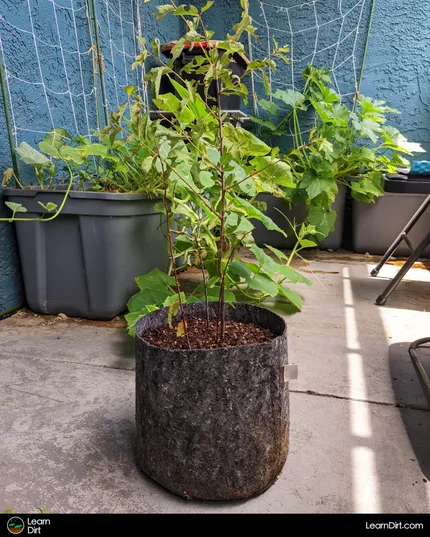
In guild planting, the multi-layered plant community usually revolves around a central tree or a key crop species as the cornerstone or anchor, and then a variety of other crops are selected which will grow well together.
Guild planting is a higher-order holistic approach to creating more biodiverse polycultures than simple companion planting. It takes more species into account, as well as a more complex web of relationships between each plant species.
Guild Planting vs. Syntropic Agroforestry
Guild planting is also very closely related to syntropic food forests. Let's look at where these two overlap, and how they differ:
This article is currently under construction. Please check back soon for our full explanation!
Guild Planting vs. Undercropping
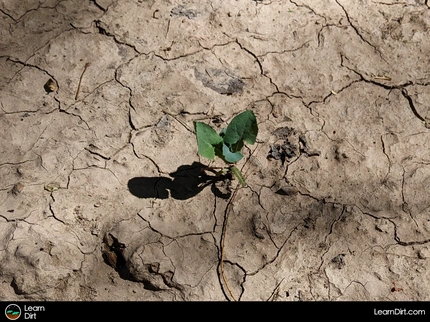
Undercropping is growing one species below another. This most-typically involves growing shorter shade-loving plants underneath taller sun-loving plants.
Certainly within a guild, plants are undercropped below others - often in multiple layers like a forest.
This means undercropping is one way that plants can be worked into a guild together.
Check out our undercrop guide here to read more about the specifics of undercropping.
Guild Planting vs Anchor Plants
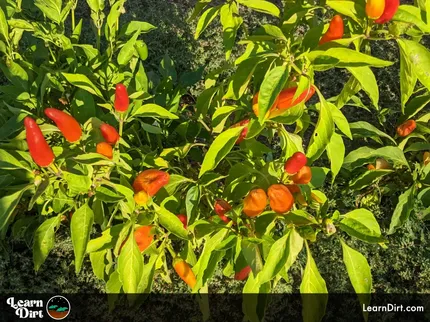
Anchor plants are a concept from landscaping, where larger plants are chosen as "anchors" - providing points of interest, size, shape, color, or texture to a landscape.
While some thought may be put into symbiotic affects from groupings around anchor plants, the focus is primarily visual appeal.
With guild planting, we may well also look at aesthetics, but it's generally further down the list of considerations as compared to nutrient cycling, pest repelling, soil remediation, and other more practical concerns.
In other words, the anchor plant concept focuses primarily on visual harmony, while guild planting focuses primarily on ecological harmony.
Join The Regenerative Gardening Community
Looking for a place to meet growers,
ask questions, share knowledge, be heard,
and feel like you belong? 🌱
Check It Out!
Guild planting also typically revolves more around edible plants that traditional landscaping does, which may further distinguish the anchor plant concep from guild planting.
Guild Examples
The best way to understand guild planting is to take a look at a bunch of examples.
We'll go over a number of common plant guilds, and different example pairings for each that can create a symbiotic effect.
We'll also discuss why each example works, and the interplay between the different species.
Since guild planting most-commonly revolves around trees (though not necessarily!) we're looking at tree guild examples first:
This article is currently under construction. Please check back soon for our full guild planting lists!
Other Guild Examples
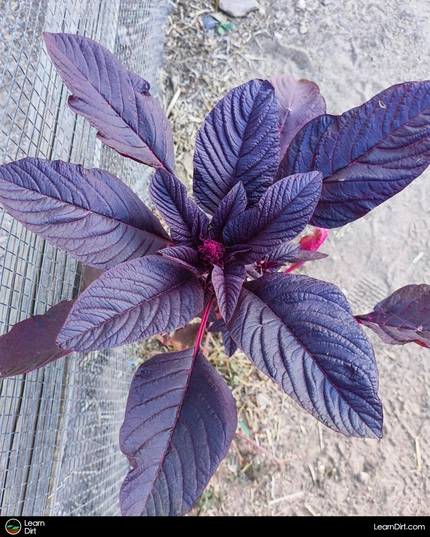
Amaranth Guild
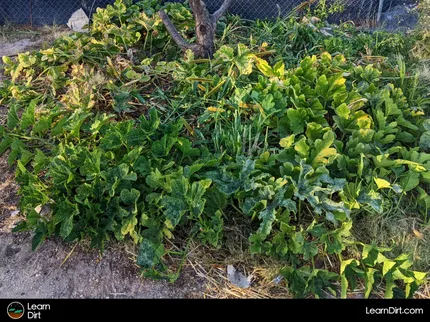
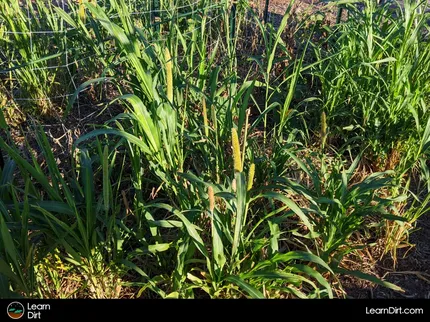
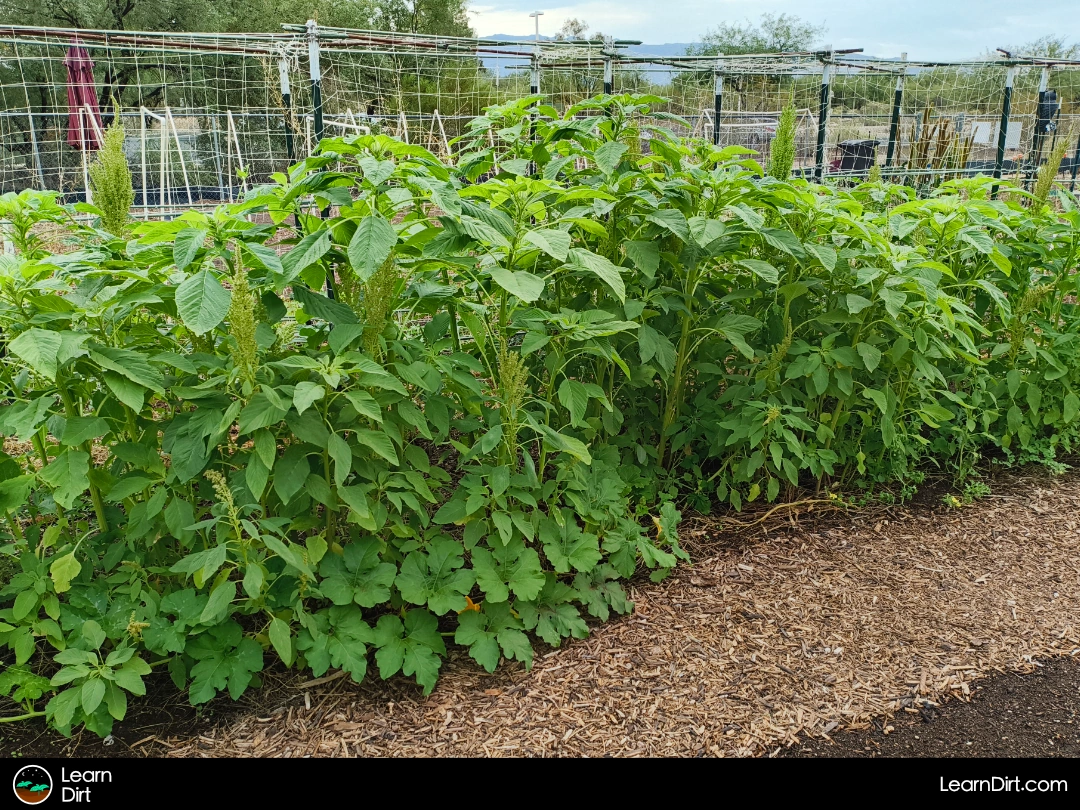
I recently grew a primary crop of amaranth, with a number of different species growing below it. This could be thought of as an amaranth guild, where amaranth is the cornerstone species.

Here's how it worked:
- Amaranth provided tall supporting stalks for beans and melons to climb up (similar role to corn in the three sisters, or to sunflowers)
- Cowpeas provided nitrogen fixation to improve soil fertility
- Pumpkins and squash provided living ground cover, preventing weeds, and shading + protecting the soil
- Amaranth provided tall shade, to help keep the harsh summer desert sun off the other plants
- Basil grew in the shade under the amaranth, and may have helped repel some pests
- Most of the amaranth leaves were harvested for blanching and freezing, but damaged leaves as well as stalks and stems were chopped + dropped to add carbon to the soil.
- All plants provided flowers at different times for the pollinators and other beneficial insects

When your guild revolves around a main crop like this rather than one central tree, it can sometimes be difficult to decide exactly which plant is actually the cornerstone species in your guild.
While it's all relative and can be looked at from perspectives where any plant might be considered the cornerstone species, here's why I see amaranth as the main species in this guild example:
- The amaranth was sown the densest
- Amaranth was the tallest plant in the guild
- Amaranth did the majority of the shading, and was responisble for most of the microclimate created
- Support for melons and beans to climb was provided by the amaranth
- The majority of the carbon and general biomass in the guild was produced by the amaranth
- Amaranth provided the most food, both to me and to grasshoppers and leafhoppers which utilized the leaves
- Birds hung around on the amaranth and snacked on the grasshoppers, providing the most food for them as well
- Without the amaranth, many synergies in this guild would collapse
While any species could be seen as the cornerstone (and it's even helpful to try and see how each and every species in a guild might be considered its cornerstone), the shear volume of biomass and number of different uses and synergies provided by the amaranth makes this one the most likely candidate to refer to as the key species in the group.

As this guild matured and eventually progressed into the cooler autumn season, I was able to utilize the shady microclimate under the amaranth to help get cool season seeds to germinate below.
When the cool season seedlings were sprouted and beginning to establish, I began thinning out the amaranth by harvesting leaves to blanch and freeze.
Through successive leaf harvests, understory light access gradually increased at a pace which helped the cool season crops to adjust.
Eventually, all the amaranth stalks were chopped down and used as mulch around the cool season crops - feeding the microbiome in the process.
Beanstalks were also chopped for more mulch and microbiome food, and the beans also add nitrogen to the soil.
Corn Guild
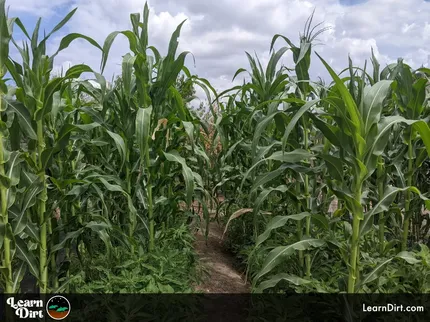
You may already be familiar with a corn guild, and that's the classic "three sisters" planting - of corn, beans, and squash.
The corn provides tall supports and lots of calories, but has high nutrient needs.
The beans fix nitrogen, and can be chopped and dropped at the end of the season to put nitrogen into the soil to fuel next season's crop. They're also high in protein.
Finally a trailing squash, often a winter gourd is grown along the ground as a living mulch which covers and protects the soil while smothering weeds.
The squash are a great source of calories and nutrition, and their seeds are high in protein.
Another variation of this is a MILPA mix, typically the three sisters along with a selection of other crops which are chosen because of their synergies with the three sisters.

That's all for now, thanks for reading!
If you have any questions, comments, or would like to connect with fellow gardeners, head on over to the forum and post there.